

Navigating a Dynamic Career Landscape
A career in business analysis or project management is a dynamic journey filled with challenges, triumphs, and continuous growth. In this article, I’ll draw on my own three-decade journey from junior business analyst to senior management professional—one that hasn’t always been smooth.
I began my career by wearing various hats, overseeing both finance and technology business analysis. Over time, I progressed through senior and business analysis management roles within consultancy firms. Consulting allowed me to explore different roles, such as project manager, scrum master, and iteration manager. Today, I’m a technology engagement manager involved in building the business analysis practice.
Throughout my career, creating opportunities for myself was crucial. I volunteered for every opening that came my way, including being the first to tackle an agile project when agile practices were introduced. In a world that’s always changing, taking proactive steps in your career is integral to your growth.
Building Your Roadmap to Success
“By failing to prepare, you are preparing to fail.” — Benjamin Franklin
Creating a career plan is like mapping out your professional journey. It gives you a clear direction, sets objectives, and helps in decision-making. For business analysts, project managers, and those in similar fields, a carefully designed career plan acts as a roadmap to success.
Consider using the following structure for your own career plan:
| Categories | Details |
| A Concise Summary Statement | Provide a clear overview of your career objectives. |
| Goal Alignment | Ensure your career plan aligns seamlessly with both your personal and professional goals. Where do you see yourself in the short term (one year), medium term (five years), and long term (beyond)? |
| Skill Development | Identify the skills necessary for your desired role and strategically plan how to acquire or enhance them over time. It’s important to have an inventory of current skills—an honest assessment of your existing skill set. Continuous skill development is key to staying relevant in your field. Outline your plans to acquire fresh competencies. |
| Identification of Relevant Resources |
Pinpoint the tools and materials that will help you grow. |
| Action Items | List tangible steps like pursuing further education, engaging in training programs, exploring professional development avenues, and taking on potential work projects. |
| Networking | Integrate effective strategies for expanding your professional network. Attend industry events, engage in online forums, and establish connections with both peers and mentors. Building a robust network is instrumental in creating opportunities and gaining valuable insights for your career growth. |
Tailoring Your Career Development Plan
Customizing your development plan is integral to career growth. If you aim for leadership roles, consider leveraging your skills and experience to mentor and develop others. Likewise, for those pursuing more specialized positions, focus on strategically applying newly acquired skills and knowledge to benefit the company. Another crucial aspect to include is coaching and mentoring. Having recently developed a passion for coaching and mentoring, I now offer career coaching services based on my experiences.
Let me share a story about a client named Emma (not her real name). Emma was deeply passionate about project management but was uncertain about her career as a technical analyst. With a clear vision and goal in mind, she aspired to become a project manager. Working as a senior technical analyst one day, Emma saw an opportunity to showcase her potential as a project leader within the project she was working on. Seizing the chance, she volunteered to take on project management tasks, impressing her project director with both her passion and proficiency. Through dedication and capability, Emma successfully transitioned from a senior technical analyst to a project manager, turning her initial uncertainty into a success story.
This anecdote highlights the importance of setting goals and having a clear vision for personal and professional growth. It shows the power of pursuing your interests, exploring new opportunities, and defining your path, all of which lead to a fulfilling and successful career.
Have you set your own career goal yet?
Defining Your Goals
Establishing goals is a foundational element of career progression. Goals provide a sense of purpose and motivation as well as a framework for gauging success. Here’s a look at how to make your goals measurable and achievable:
- Embrace the SMART criteria (specific, measurable, achievable, relevant, time-bound) to ensure your goals are precise and actionable
- Strike a balance between short-term accomplishments and long-term aspirations
- Stay open to adjusting your goals as your career evolves; adaptability is vital in the dynamic landscape of business analysis and project management
Creating a 90-Day Plan
In my book, The Art of Getting Business Analysis Right, I emphasize the significance of creating and implementing 90-day activity plans. I discuss the importance of focusing on specific goals, setting priorities, and establishing metrics for success. This approach has proven effective for me, and I continue to adhere to the principles of 90-day plans.
One key aspect I explore is allocating time to assess your own skills. Personally, I evaluate my skill set by aligning it with my 90-day plans, which I set at the beginning of each year. These plans not only encompass my career objectives but also my personal goals. They serve as a roadmap, outlining individual tasks that I aim to accomplish within the given timeframe.
The 90-day plan is a powerful tool for business analysis and project professionals, offering a focused timeframe to achieve specific objectives and showcase tangible results. Here’s how adopting this approach can expedite your career progression:
- Break down your long-term goals into smaller, attainable tasks achievable within a 90-day timeframe
- Regularly reassess your plan, integrating feedback and adjusting objectives based on evolving circumstances
- Share your 90-day plan with your managers, trusted teammates, or mentors to highlight your commitment to professional development and goal achievement
Harnessing Morning Rituals for Peak Performance
Successful professionals often attribute their achievements to morning routines that set a positive tone for the day. As a business analyst, manager, or project professional, incorporating intentional practices into your mornings can enhance productivity and lay the groundwork for goal achievement. Here are some examples:
- Start your day with a brief reflection on your goals and priorities
- Go for a jog or exercise to stimulate creativity and enhance focus
- Consume industry-related content, such as podcasts, to stay informed and inspired
Choosing Your Business Analysis Career Path
So, what does the business analysis career path look like?
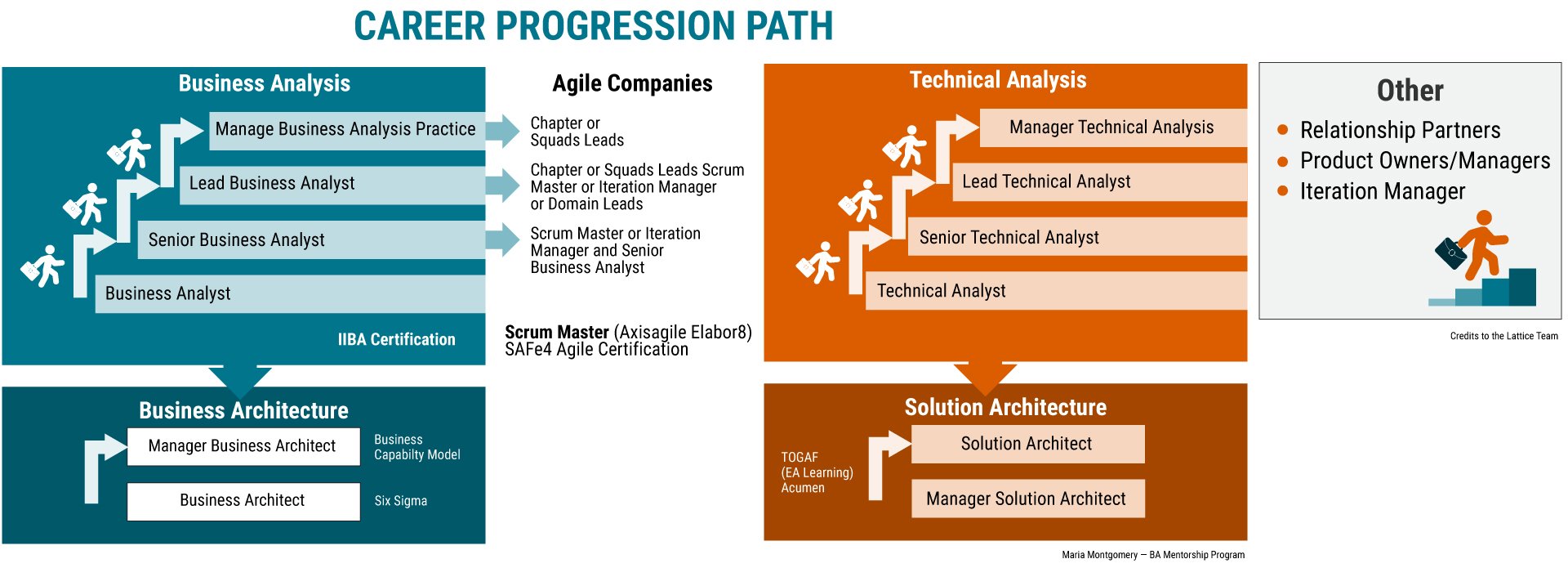
As shown in the image above, you can choose various paths in your business analysis career.
In the business analysis stream, you move from business analyst through leadership and management levels. Alternatively, you can take a sidestep into business architecture. Make sure to get a certification too, such as Six Sigma. In the technical analysis stream, you focus on progressing from technical analyst to leadership in technical analysis. You can also take a sidestep into solution architecture. Keep learning continuously and aim for certifications, such as TOGIF accreditation. Many other options are also emerging, such as roles in technology relationship building, product ownership, and interaction management.
Here’s another anecdote that impacted me. One of my mentors switched from a technical background to project management. Being flexible and adaptable is crucial for exploring different career paths in our field. Moving from a technical role to project management is highly valuable, especially in guiding businesses to success. Having technical knowledge is an advantage, as it helps you steer an organization in the right direction. There’s no definitive right or wrong answer in the pursuit of new paths, and you always have the option to return to your initial roles if you so choose.
During various technology projects, the ability to simplify complex technical details becomes essential. Being adept at translating technical jargon into simpler terms facilitates effective communication with the business side.
Moving into project management empowers you to bridge the gap between technology and business using their technical expertise. This strategic move brings substantial value to your organization, fostering seamless collaboration and alignment between technical initiatives and broader business goals. Moreover, possessing technological skills during the transition to the business domain enables individuals to effectively apply their technical expertise in guiding organizations.
Embarking on career growth means purposefully developing yourself and seizing opportunities as they come. Here are some examples:
- Getting a bigger job, like moving from a senior business analyst in marketing to a business analysis practice lead or manager
- Becoming a manager by hiring your first direct report
- Taking a job where you lead a team and help develop its strategy
- Trying something new by exploring areas such as business architecture or product management, for instance
Cultivate a growth mindset, persist in learning, and consider exploring various directions. As a business analyst, you might contemplate delving into business architecture, which offers a unique avenue for professional development. Remember that you can use your core business analysis skill set in other roles, too. As a leader, your role isn’t just about delegating and managing. You can also use your problem-solving skills to help your team overcome challenges.
In an article on problem-solving, I wrote: “As a leader, it is up to you to make problem-solving a seamless process that allows your team to look at the problem, the information provided, and find a solution to it. Your team should be able to use whatever information they have at their disposal.”
That said, not everyone is naturally drawn to roles that involve managing people. Find a position that truly aligns with your interests and strengths, like problem-solving and investigation. By exploring different professional paths, you may have interesting and valuable experiences along the way.
It’s also important to try new things and venture into diverse paths to discover fresh challenges, learning opportunities, and connections. This exploration helps shape an individualized role that aligns perfectly with your aspirations. Throughout your journey, maintain a growth mindset and fearlessly explore new directions.
Closing Thoughts
In the dynamic fields of business analysis and project management, navigating the competitive landscape demands a proactive and strategic mindset. Your journey toward career progression is uniquely yours, shaped by a thorough career plan, precise goals, the 90-day plan approach, and positive morning rituals.
Continuously assessing and validating yourself through a well-defined career plan is a valuable tool. It helps you understand your distinct path, articulate your goals, and align your choices with your ambitions. Embrace the process, celebrate your dedication, and pave the way for lasting achievement in your evolving career.
And most importantly, never give up! Always strive to invest in your development and explore mentorship programs. Having walked that path myself, I know the success that comes from perseverance and continuous growth.

About the Author
Maria Montgomery is a distinguished leader, career coach, trainer, and facilitator who has successfully guided numerous individuals to enhance their skills for superior performance. Since 2014, she has spearheaded results-driven mentorship programs tailored to both individual and team needs. A passionate speaker and author, Maria actively contributes articles to the Medium publication. An expert in individual and team capability-building, Maria holds certifications as a Certified Professional Life Coach, Linguistic Programming (NLP) practitioner, and Cognitive Behaviour Therapy (CBT) Practitioner.


