
3. Techniques
3.15 Problem Shaping and Reframing
Guide to Business Data Analytics
3.15.1 Purpose
Problem shaping and reframing are creative applications of problem analysis techniques that result in alternative formulation of the problem faced by an organization. Problem shaping specifically requires refining the problem to a state where a solution process can be applied. Problem reframing refers to re-stating the problem in a different context. Both techniques are interdependent and allow deeper problem analysis leading to simpler or more creative solutions to the problem.
Problem shaping and reframing are creative applications of problem analysis techniques that result in alternative formulation of the problem faced by an organization. Problem shaping specifically requires refining the problem to a state where a solution process can be applied. Problem reframing refers to re-stating the problem in a different context. Both techniques are interdependent and allow deeper problem analysis leading to simpler or more creative solutions to the problem.
3.15.2 Description
When conducting data related investigation and analysis, there may be a predisposition to review the available data without giving enough attention to the problem. The process followed by data analytics teams may be scientific, comprehensive, and technologically advanced, but may not validate whether the right business problem is being solved. Problem reshaping and reframing helps in understanding the problem from different viewpoints and contexts so that the real business problem or more concrete sub-problems can be uncovered.
Many root cause analysis techniques used during problem analysis are reductive in nature, for example 5 Whys and Fishbone (Ishikawa). These elaborate the business context in which the techniques should be applied, while iteratively developing a detailed understanding of the underlying causes. While such analysis is useful to narrow down the problem, a completely alternate framing of the problem may enable better or easier solutions.
Both problem shaping and reframing require the application of critical thinking and logical deductions that are best explained through examples. Consider a health insurer trying to fix the premium amount for health insurance products:
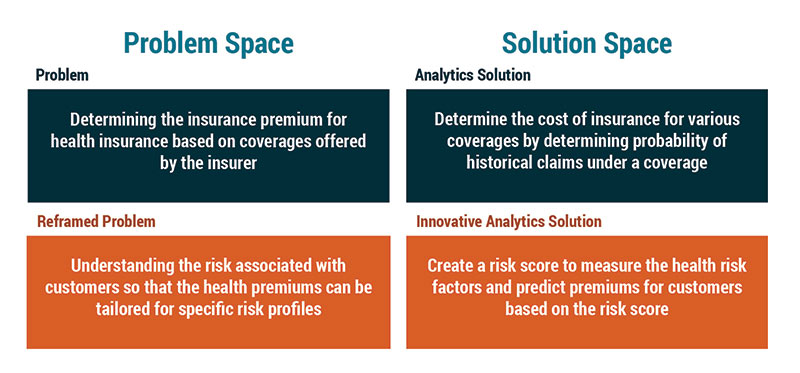
Reframing a problem through a change in the context in which the problem is studied often leads to an alternate understanding of the problem and additional new ways to solve it. In this example, changing the perspective from how the insurer views the problem, to considering the customer perspective that includes the customer lifestyle, demographics, medical history, and so forth.
When conducting data related investigation and analysis, there may be a predisposition to review the available data without giving enough attention to the problem. The process followed by data analytics teams may be scientific, comprehensive, and technologically advanced, but may not validate whether the right business problem is being solved. Problem reshaping and reframing helps in understanding the problem from different viewpoints and contexts so that the real business problem or more concrete sub-problems can be uncovered.
Many root cause analysis techniques used during problem analysis are reductive in nature, for example 5 Whys and Fishbone (Ishikawa). These elaborate the business context in which the techniques should be applied, while iteratively developing a detailed understanding of the underlying causes. While such analysis is useful to narrow down the problem, a completely alternate framing of the problem may enable better or easier solutions.
Both problem shaping and reframing require the application of critical thinking and logical deductions that are best explained through examples. Consider a health insurer trying to fix the premium amount for health insurance products:
Reframing a problem through a change in the context in which the problem is studied often leads to an alternate understanding of the problem and additional new ways to solve it. In this example, changing the perspective from how the insurer views the problem, to considering the customer perspective that includes the customer lifestyle, demographics, medical history, and so forth.
3.15.3 Elements
.1 Problem Frame and Context
Context refers to the circumstances that influence, are influenced by, and provide understanding of the problem or the solution. The problem is typically analyzed within a context of industry, perceptions, assumptions, best practices, processes, goals, regulations, and any other element that influences the problem or the solution.
When shaping a problem, context is analyzed with additional focus on the problem’s symptoms, root causes, constraints, risks, and so on. The underlying context is consciously challenged for problem reframing. As a result, assumptions, perceptions, and business goals may need to be restated.
.2 Problem Statement
The original problem, reshaped problem, or reframed problem is clearly stated and documented. A well-documented problem eliminates any ambiguity in stakeholder perception of the problem and allows focus on the real problem. The problem statement ensures that enough ownership is attributed to respective stakeholders affected by the problem.
A typical reframed or reshaped problem statement may be formed in the following way:
.1 Problem Frame and Context
Context refers to the circumstances that influence, are influenced by, and provide understanding of the problem or the solution. The problem is typically analyzed within a context of industry, perceptions, assumptions, best practices, processes, goals, regulations, and any other element that influences the problem or the solution.
When shaping a problem, context is analyzed with additional focus on the problem’s symptoms, root causes, constraints, risks, and so on. The underlying context is consciously challenged for problem reframing. As a result, assumptions, perceptions, and business goals may need to be restated.
.2 Problem Statement
The original problem, reshaped problem, or reframed problem is clearly stated and documented. A well-documented problem eliminates any ambiguity in stakeholder perception of the problem and allows focus on the real problem. The problem statement ensures that enough ownership is attributed to respective stakeholders affected by the problem.
A typical reframed or reshaped problem statement may be formed in the following way:
- Problem statement: key statements describing the problem or the opportunity.
- Impacted stakeholders: stakeholders impacted or influenced by the problem.
- High level description of the solution or key needs: for a business data analytics problem, it may contain the analytics approach, required data, and the type of analytics problem (for example, descriptive, predictive, or prescriptive).
- Comparison to an alternative formulation of the problem.
3.15.4 Usage Considerations
.1 Strengths
.1 Strengths
- Provides a robust analysis of the problem context so that business data analytics engagements are aligned to business objectives.
- Provides an outsider view of the problem, which attracts new and fresh solution approaches.
- Can uncover new data sources that may be needed for analysis.
- Can uncover non-analytics solutions to the problem, which might be simpler or more feasible.
- It can create potential conflicts with stakeholder perception of the problem. It is crucial that the data analytics team gets buy-in from key stakeholders.
- It is limited to individual creativity and knowledge while reshaping or reframing the problem. This can be addressed by conducting a group exercise, preferably through brainstorming sessions or stakeholder workshops.
- It may ignore the data cues from previous analysis or introduce the personal bias of influential stakeholder.