2.6 Tasks
2.6.1 Organizational Strategy
Guide to Business Data Analytics
Organizations aiming to integrate analytics to drive business decisions consider unique organizational models for the analytics team and how these organizational models can be situated within the organization in relation to other teams and business units. Many organizations start with analytics initiatives as proof of concepts or pilots for projects that have a limited impact on the strategic posture of the organization.
The following organizational models can help with a transformation from an analytics-aware organization to an analytics-driven organization.


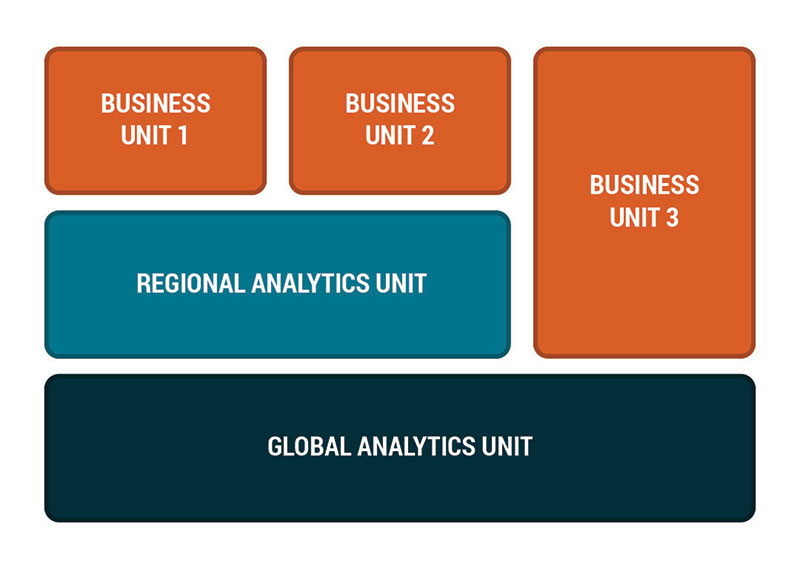
Another choice of determining an organizational model for analytics teams is to organize by different functions within the organization such as business intelligence units, IT, CIO's office, and so forth.
How the analytics teams is organized depends upon, but is not limited to:
When determining the right organizational model for analytics teams, multiple strategic business analysis skills are used to connect enterprise components with analytics. Systems thinking, conceptual thinking, and expertise in collaborating with cross-functional stakeholders, including executive leadership, all help define organizational models. Techniques such as business model canvas, balanced scorecard, benchmarking and market analysis, value chain analysis, SWOT, and CATWOE are relevant in connecting enterprise components for analytics transformation.
The following organizational models can help with a transformation from an analytics-aware organization to an analytics-driven organization.
- Centralized model refers to the analytics team operating as a single unit supporting other business units in decision- making. An analytics Centre of Excellence is a good example of a centralized model where upskilling talent may be an advantage as it forms a cohesive team within the organizational structure.
- Decentralized model refers to the model where analytics teams are embedded in different business units. In a decentralized model, analytics teams may be more aligned to the business practices and processes of a business unit which may positively influence specialized analytics solutions within that business unit.
- Hybrid model refers to a mix of centralized and decentralized analytics teams operating within an organization. For example, a hub and spoke model can be considered with geographic separation for hubs and centralized structure within a specific geography to structure the analytics teams.
Another choice of determining an organizational model for analytics teams is to organize by different functions within the organization such as business intelligence units, IT, CIO's office, and so forth.
How the analytics teams is organized depends upon, but is not limited to:
- enterprise data ownership,
- governance within the organization,
- requirements around outsourcing the analytics,
- competition,
- overall industry outlook,
- supplier and vendor relationships, and
- involvement of senior leadership in analytics efforts.
When determining the right organizational model for analytics teams, multiple strategic business analysis skills are used to connect enterprise components with analytics. Systems thinking, conceptual thinking, and expertise in collaborating with cross-functional stakeholders, including executive leadership, all help define organizational models. Techniques such as business model canvas, balanced scorecard, benchmarking and market analysis, value chain analysis, SWOT, and CATWOE are relevant in connecting enterprise components for analytics transformation.
| A Sample Organization of Analytics Teams within a Large Organization Building an effective model for the analytics team depends on various organizational components such as business functions, leadership oversight, existing data architecture and sources, and types of business data. Many organizations start with a decentralized approach for analytics engagements with analytics embedded into different business units. With maturity in data governance, data best practices within an organization start to leverage analytics for strategic benefits. The organizational model may reflect maturity over time. For large scale enterprises, the analytics team takes either a hybrid or a centralized shape with multiple business units requesting parallel engagements from the analytics organization with standardized practice. An example of a Centre of Excellence for analytics may resemble a model such as this: 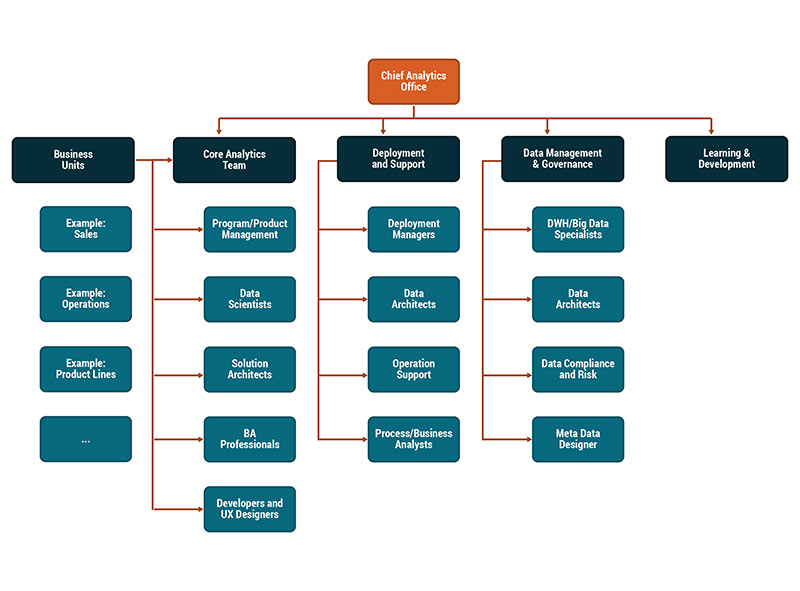 |