
3. Understanding Product Ownership Analysis
3.1 Integrating Business Analysis and Product Ownership
Guide to Product Ownership Analysis
Integrating business analysis and Product Ownership provides a strong foundation for Product Ownership Analysis.
Business analysis is:
"The practice of enabling change in an enterprise by defining needs and recommending solutions that deliver value to stakeholders". — BABOK® Guide
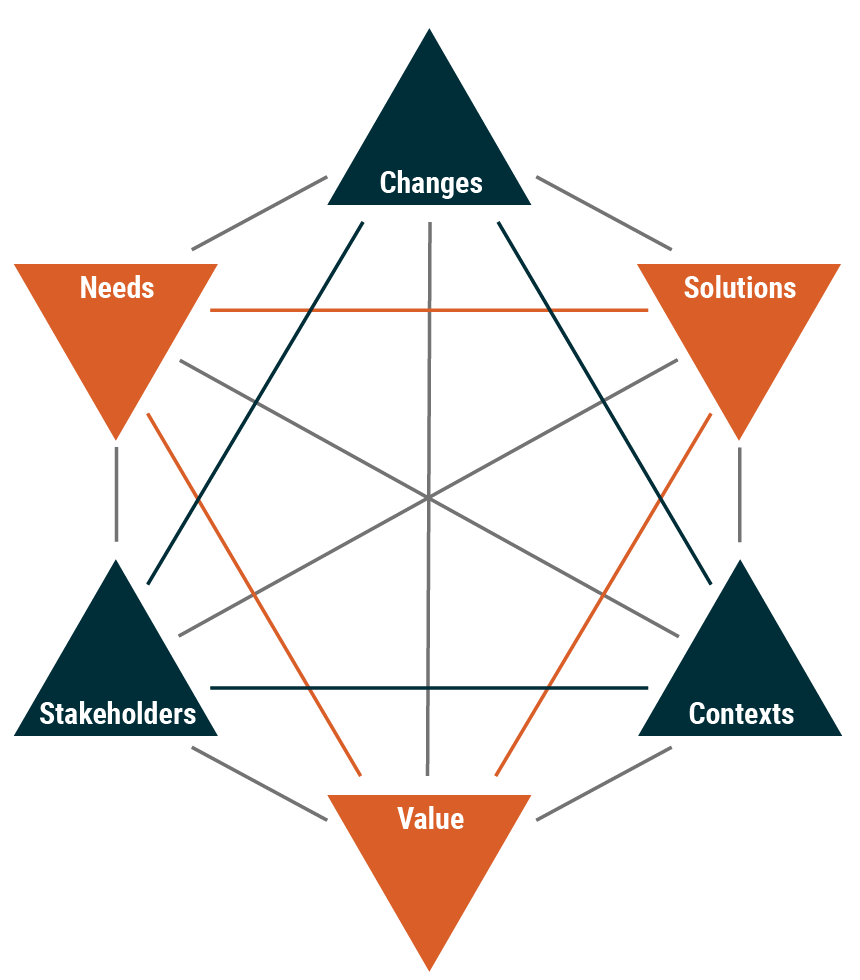
The Business Analysis Core Concept Model™ (BACCM™) is a conceptual framework for business analysis that can be applied to POA. The BACCM is comprised of six terms that have a common meaning to business analysis practitioners:
Business analysis can be powerful when applied to Product Ownership challenges. Application of business analysis techniques leads to robust decision-making and effective problem-solving. When business analysis is applied in Product Ownership analysis, it:
• Creates high-value products for customers.
• Increases productivity in delivering product increments.
• Identifies effective, viable solutions that meet long-term needs.
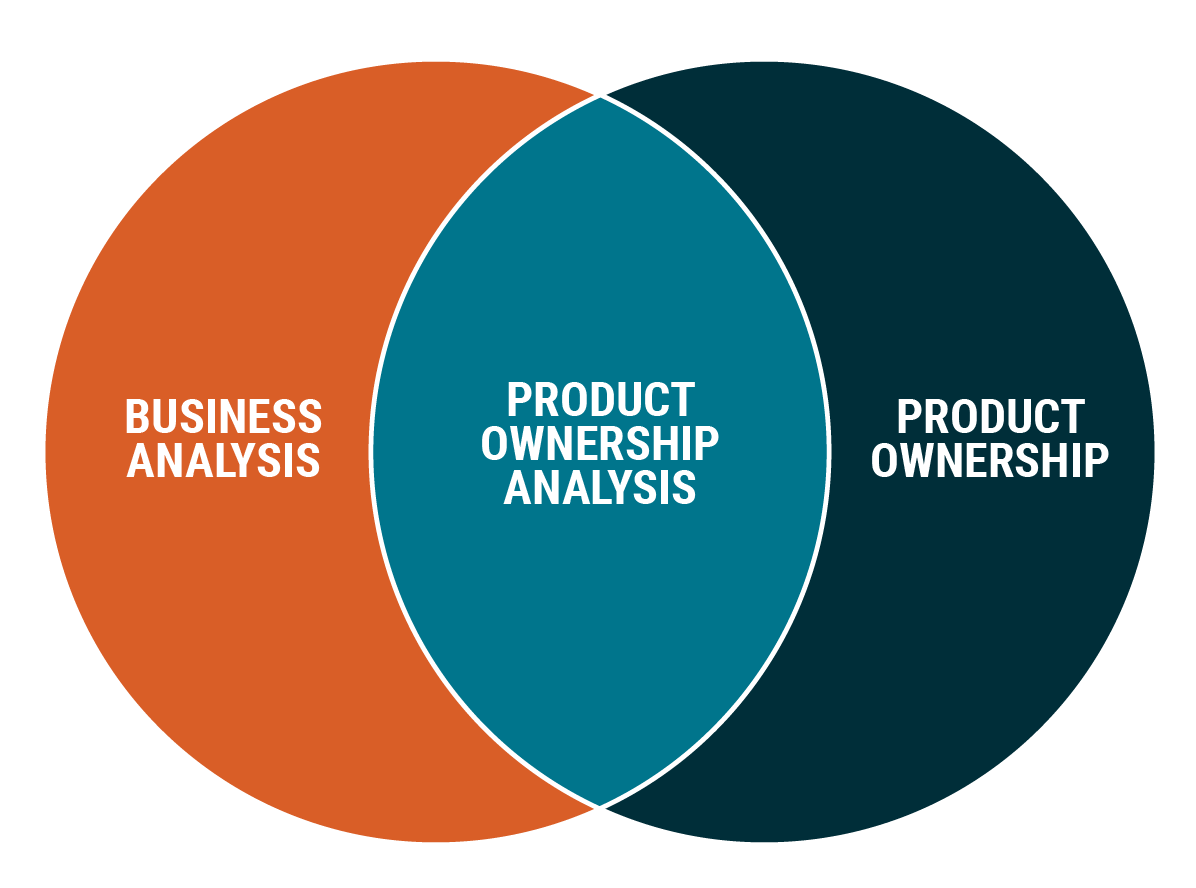
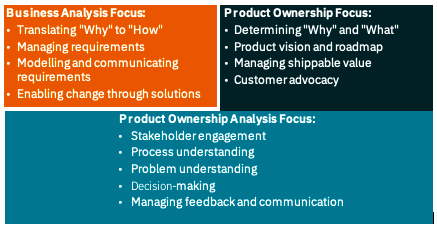
The intersection of business analysis and POA disciplines highlights where the application of business analysis practices can enhance the quality of outcomes through Product Ownership related activities.
A foundation of analysis results in:
• A structure to discover and assess context, including:
• Continually improving internal work processes to improve efficiencies that support value delivery.
Business analysis is:
"The practice of enabling change in an enterprise by defining needs and recommending solutions that deliver value to stakeholders". — BABOK® Guide
The Business Analysis Core Concept Model™ (BACCM™) is a conceptual framework for business analysis that can be applied to POA. The BACCM is comprised of six terms that have a common meaning to business analysis practitioners:
| • Changes • Needs • Solutions • Value • Stakeholders • Contexts |
 |
Business analysis can be powerful when applied to Product Ownership challenges. Application of business analysis techniques leads to robust decision-making and effective problem-solving. When business analysis is applied in Product Ownership analysis, it:
• Creates high-value products for customers.
• Increases productivity in delivering product increments.
• Identifies effective, viable solutions that meet long-term needs.
The intersection of business analysis and POA disciplines highlights where the application of business analysis practices can enhance the quality of outcomes through Product Ownership related activities.
 |
 |
A foundation of analysis results in:
• A structure to discover and assess context, including:
- Product domain
- Key trends
- Organizational dynamics and frameworks
- Customer environment using tools and techniques, such as:
- benchmarking and KPIs,
- Kano Model, and
- document analysis
- Motivations
- Attitude
- Influence
- Roles and responsibilities
- A planned solution evaluation
- Assessment approach
- Needs assessment
- Strategy analysis
• Continually improving internal work processes to improve efficiencies that support value delivery.