
5. The POA Framework
5.2 Cultivate Customer Intimacy
Guide to Product Ownership Analysis
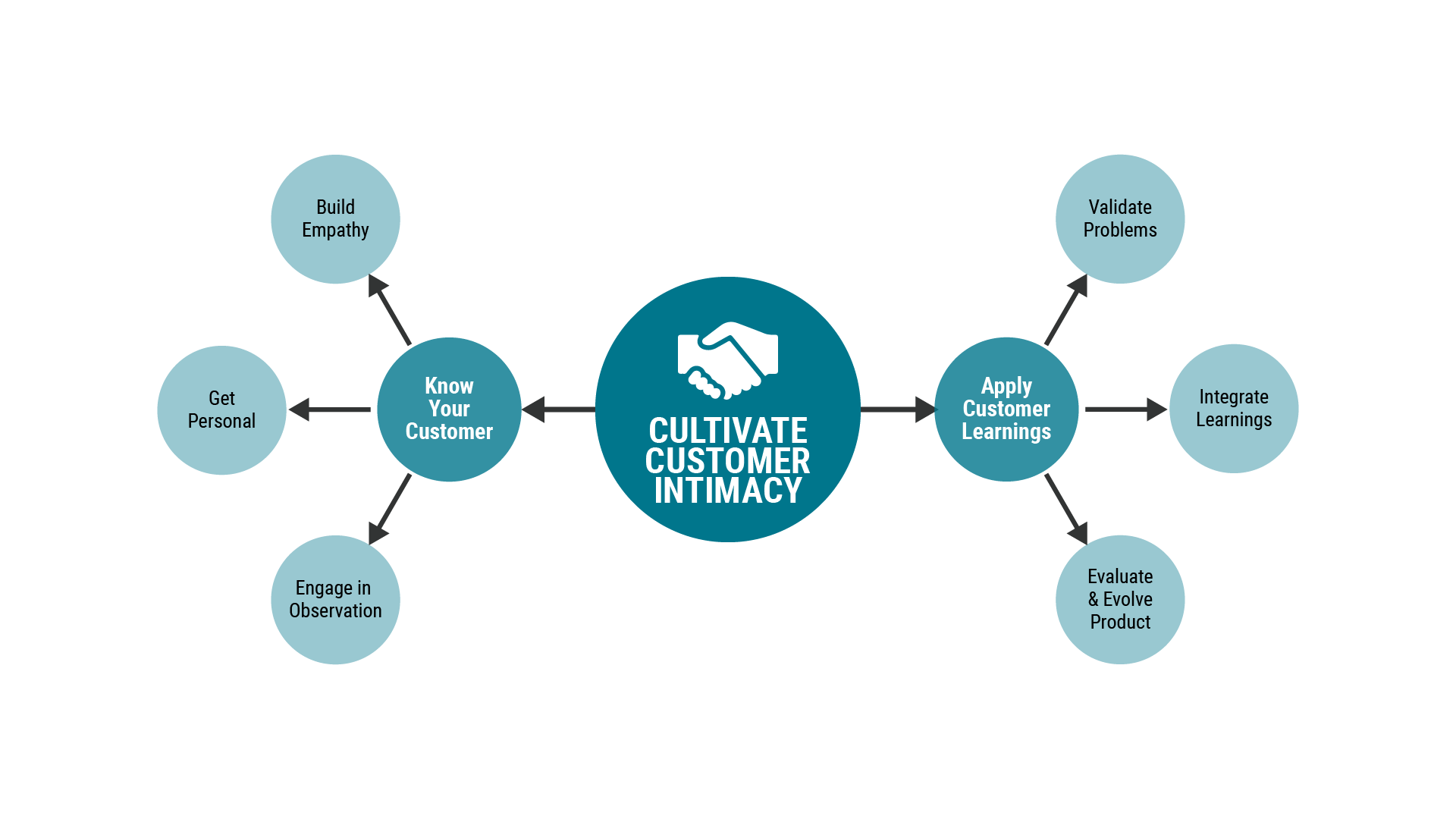
Customer intimacy centres on knowing people. Cultivating it takes deep attention to identify what customers' value, dedication, and passion.
"Some people say, 'Give the customers what they want.' But that's not my approach. Our job is to figure out what they're going to want before they do. I think Henry Ford once said, 'If I'd asked customers what they wanted, they would have told me, a faster horse!'. People don't know what they want until you show it to them. That's why I never rely solely on market research. Our task is to read things that are not yet on the page." - Steve Jobs
Steve Jobs set an example of cultivating customer intimacy by producing products through his depth of understanding people and showing them what they needed before they realized it themselves.
As the customer advocate to the team, the Product Owner or POA Practitioner needs to maintain a customer-centric view beginning with understanding:
- Customers' needs and wants,
- Customers' place in the market, and
- Customers' present and future view.
- Building empathy,
- Understanding their concerns,
- Being sensitive to their motivations,
- Identifying with their needs, and
- Clearly defining their problem.
- Analytics,
- Domain knowledge,
- Research, and
- Detailed understanding of customer journeys.
Cultivating customer intimacy is an investment requiring dedicated effort and teamwork. The Product Owner can inspire and motivate the team to do their best work for their customer.
Every organization has its own identity and values. POA Practitioners have the responsibility to champion the customer and nurture a team culture conducive to identifying with the humanness of customers. Successful products rely on cultivating a detailed level of customer intimacy.
The product or service development effort either succeeds or fails through effective product ownership related work. The desired outcomes occur through:
- Drive and passion to know the customer.
- Leadership and guidance to build a culture of customer-centric teamwork.
- Availability and engagement with the customer, stakeholders, and team to make effective decisions and support empirical teamwork.