
5. The POA Framework
5.6 Learn Fast
Guide to Product Ownership Analysis
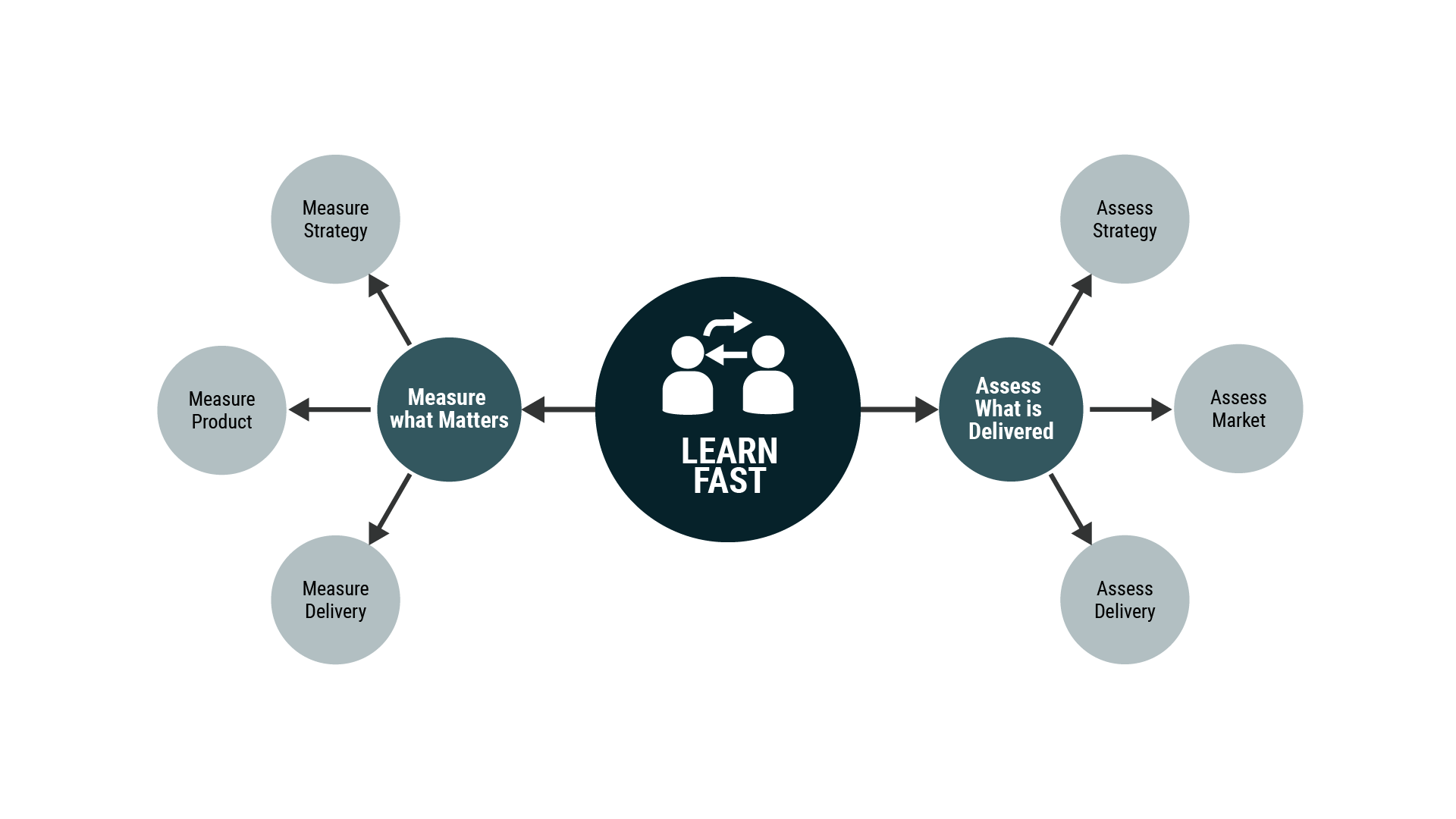 Speed and innovation are the two areas in the product landscape that differentiate a successful product. Customers have a lot of options. If a product cannot deliver value at the rate of change for customer expectation, it is bound to fall behind the competition. Success depends on:
- The ability to quickly deliver value,
- Understanding the gap in expectation by testing the product in the market, and
- Refining the product.
- What do customer and business value mean?
- What are the metrics that best describe the value?
- How should the product change based on learnings?
- Measure what matters: Understanding the need for key metrics that provide a structured approach to measure and track the learnings.
- Assess what is delivered: Using the insights from the key metrics to refine the product.
It is imperative for enterprises to measure the performance of product development throughout the product lifecycle. The key metrics are chosen to help estimate whether the product provides the value intended and follows the product vision and strategy, throughout the product lifecycle. These key measures are:
- Strategic measures: These measures determine the effectiveness of a product vision and strategy, and are directly tied to different business objectives, of an enterprise.
- Product measures: These measures outline customer acceptance and the popularity of the product for the intended customer base.
- Delivery measures: These measures indicate the delivery performance and outline the understanding and the ability of the product team, in developing a cohesive product.
Identifying and measuring product objectives is not enough; the product also needs to adapt to the insights the measures indicate. The right insight must be derived by assessing the measures and then used to make changes that are useful for delivering value through the product.
POA Practitioners can help a Product Owner make key decisions about the right changes to the product functionalities and features. Assessing the product through the measures involves conducting:
- Strategic assessment: Measures that provide direction for the product vision, strategy, and roadmap, tied to business value.
- Product/market assessment: Measures to determine the scope and features of the product that provides customer value.
- Delivery assessment: Measures to discover gaps in product delivery and the product team's effectiveness.