
5.3 Engage the Whole Team
5.3.2 Engage & Empower
Guide to Product Ownership Analysis


Providing the product team with the confidence that their work contributes to something meaningful and valuable is important. It assures them they can do their job well.
Organizational culture and structure have a big influence. POA Practitioners consciously strategize their influence to engage and empower the team, and outward to the customers, stakeholders, and the organization. Trusting in each other builds confidence.
Great POA Practitioners know their circle of influence and operate purposefully and demonstratively. The team, stakeholders, organization and possibly customers, look to them as leaders. They consider them to be trusted partners in the success of the product. Their ability to engage and empower the whole team has the potential to make the shift from good to great, and from success to failure. It is the whole team that gains confidence in their work through shared trust and goals when POA Practitioners lead by example and create a culture of success.
Engaged, empowered teams are recognized as performing better and being happier. People who are engaged and empowered:
Organizational culture and structure have a big influence. POA Practitioners consciously strategize their influence to engage and empower the team, and outward to the customers, stakeholders, and the organization. Trusting in each other builds confidence.
Great POA Practitioners know their circle of influence and operate purposefully and demonstratively. The team, stakeholders, organization and possibly customers, look to them as leaders. They consider them to be trusted partners in the success of the product. Their ability to engage and empower the whole team has the potential to make the shift from good to great, and from success to failure. It is the whole team that gains confidence in their work through shared trust and goals when POA Practitioners lead by example and create a culture of success.
Engaged, empowered teams are recognized as performing better and being happier. People who are engaged and empowered:
- Feel safe,
- Understand the people they help and who that help them, and
- Have meaningful, purposeful connections with those people.
A psychologically safe environment fulfils basic human needs that allow people to thrive. It allows people to grow, learn and take risks. Psychological safety is illustrated with trust and honesty. When people feel safe, they think better and do their best work. POA Practitioners want everyone rallied around their product to contribute their best in a trusting, supportive environment.
When psychological safety is not present people may:
How POA Helps Engage & Empower
Effective POA contributes to the team's success by actively promoting, and instilling values and principles within the whole team. These values support self-organizing teams and can promote:
BABOK® Guide Techniques
Case Study: Engage & Empower with New PO - Real Estate Construction
When psychological safety is not present people may:
- Fear humiliation,
- Fear to speak up,
- Fear to make a mistake,
- Fear that mistakes or foolish questions may be held against them,
- Not ask for help,
- Fear someone taking credit for the work of another, and
- Lack fun and happiness.
How POA Helps Engage & Empower
Effective POA contributes to the team's success by actively promoting, and instilling values and principles within the whole team. These values support self-organizing teams and can promote:
- Empowerment, giving teams enough information and resources to make decisions related to how to do their best work.
- Trust, encouraging team members to be trustworthy in word and action and in the decisions they make.
- Respect, inspiring the team to embrace diversity and demonstrate regard in all interactions.
- Appreciative, prompting team members to give recognition wholeheartedly. When team members feel valued, they do better work and become recognition-givers.
- Approachability, validating the humanness that welcomes questions or concerns that ultimately empower the team's work.
- Availability, causing team members to recognize the importance of the entire team's work through partnership.
- Listen attentively and show appreciation,
- Acknowledge their weaknesses and ask for insights from colleagues,
- Connect value with metrics, design those metrics with the team, and regularly review those metrics with the team,
- Demonstrate trust while being trustworthy, and honesty while telling the truth,
- Address the "elephant in the room" and speak in a common language,
- Encourage calculated risk-taking and questioning,
- Invite ideas and make room for creativity,
- Celebrate diversity in word and action,
- Conduct retrospections frequently and purposefully, and
- Express gratitude.
BABOK® Guide Techniques
- Collaborative Games: Encourage participation from the team member to build a shared understanding of a problem/solution or build trust within the team.
- Team Building Exercise: Several team-building exercises can be employed based on diversity and organization culture, to make each member of the product team comfortable with each other.
Case Study: Engage & Empower with New PO - Real Estate Construction
| Background HomeQi had an over-representation of expert users in the planning exercises which led to the de-prioritization of features requested by a set of end-users (i.e., property buyers). The product team worked together and took collective responsibility and pride in completing their work. Team members had complete trust in each other, kept communication open, and never failed to ask for help. However, the team was not always unified. Challenge When Sem joined as a Product Owner for the HomeQi team, he understood and anticipated some pushback from the team as they struggled to accept him. Some of the team members had been working with the organization longer. Some had specific knowledge about the market and customers. Overall, it was difficult for the new product team to take guidance from a new PO. It was a challenge Sem needed to face head-on. Action Sem knew that he would need to put in a significant amount of effort to build a cohesive and responsive team that moved as a unit. Sem took the time to understand his leadership style and personality, and he knew that his strength lay in empowering people. Sem was good at inviting ideas and treating the contributions from everyone respectfully. With this in mind Sem:
Outcome Many issues were discussed in retrospect. Each team member felt they belonged. For example, Seli joined the team as a Junior Developer and pointed out that the product was not ready for houses that needed "redesign." Seli felt comfortable enough to voice her opinion, despite being a new member of the team. Sem followed the same principles with other stakeholders. For example, he made it a point not to say:
Lessons Learned Building a psychologically safe environment for everyone requires effort and patience from all parties. Showing empathy, trust, and respect to internal and external team members is the key to developing a great team and product environment. This is always a work in progress and is the responsibility of everyone involved. |
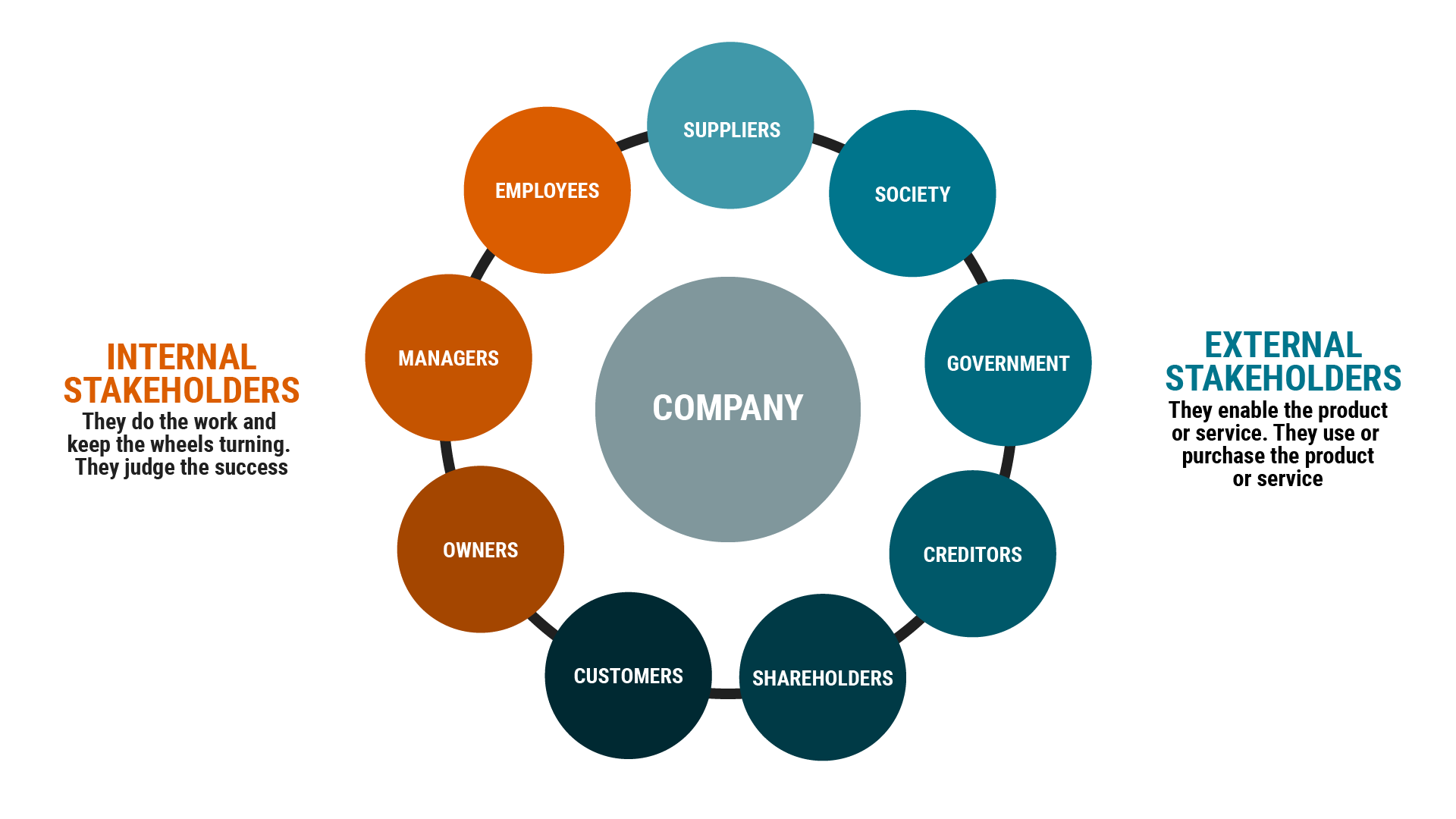
Stakeholder analysis encompasses everyone involved in the success of the product, including business and technology, and internal and external. The outcome positions the team to establish and maintain meaningful relationships with customers and other stakeholders throughout the product lifecycle. Stakeholder analysis contributes to better communication, collaboration, and solutions. It helps the team to understand the people they help and those who help them. Stakeholder analysis starts with identifying the people involved. This may include:
Stakeholder analysis progresses through understanding the people identified and having a greater knowledge of:
How POA Helps Stakeholder Analysis
POA Practitioners conduct the stakeholder analysis early in the product delivery process and update it as the work progresses. The stakeholder analysis needs to be continually assessed for the following reasons:
POA Techniques for Stakeholder Analysis
Agile Extension Techniques
Case Study: New Stakeholder - Real Estate Construction
|
Internal stakeholders
|
External stakeholders
|
Stakeholder analysis progresses through understanding the people identified and having a greater knowledge of:
- Titles and roles,
- Geography,
- Influence and interest levels,
- Communication strategy,
- How to gain support or reduce obstacles,
- Techniques/tools that contribute value individually, and
- Any unique information that will build collaborative engagement.
How POA Helps Stakeholder Analysis
POA Practitioners conduct the stakeholder analysis early in the product delivery process and update it as the work progresses. The stakeholder analysis needs to be continually assessed for the following reasons:
- People involved in the product work may change.
- Communication styles may require unique approaches.
- People who are needed may be missing.
- Collaboration strategy may need to accommodate multiple time zones.
POA Techniques for Stakeholder Analysis
Agile Extension Techniques
- Personas: Understand and empathize with an intended stakeholder to create a deeper understanding of their posture toward the product.
- Retrospectives: A tool to understand ongoing issues of the product team members to aid in stakeholder analysis.
- Stakeholder List or Maps: Catalogue stakeholders and their characteristics so that Product Owners can effectively engage with them. Use the stakeholder matrix and onion diagram to gauge the impact and influence of stakeholders with the product.
- Customer Journey Map: Identify shortcomings, strengths, and opportunities by modelling and discussing customer experience during interactions.
- Empathy Map: Develop a deeper understanding of stakeholders by challenging underlying assumptions and biases.
Case Study: New Stakeholder - Real Estate Construction
| Background WRU recently brought in Terrance, from the London branch office to the executive committee of the Product Management Office (PMO). He had significant experience in construction. Challenge After Terrance heard about HomeQi he appointed himself as the Product Coach for the HomeQi team. Sem believed that Terrance would be a great help in shaping the product with his knowledge of different markets and deep expertise in construction modelling and designing. On the other hand, owing to Terrance's acute interest in the product, Sem anticipated that ongoing product development may get impacted adversely. Sem had to figure out how to engage Terrance effectively to bring in positive changes to the product. Action After meeting with Terrance, Sem conducted a deeper stakeholder analysis to discover traits, interest, influence, and subject matter expertise to manage expectations and take actionable guidance from Terrance. In addition to the influence/interest stakeholder map, Sem added a few of his parameters. Based on his and the team's interaction with Terrance, Sem came up with: 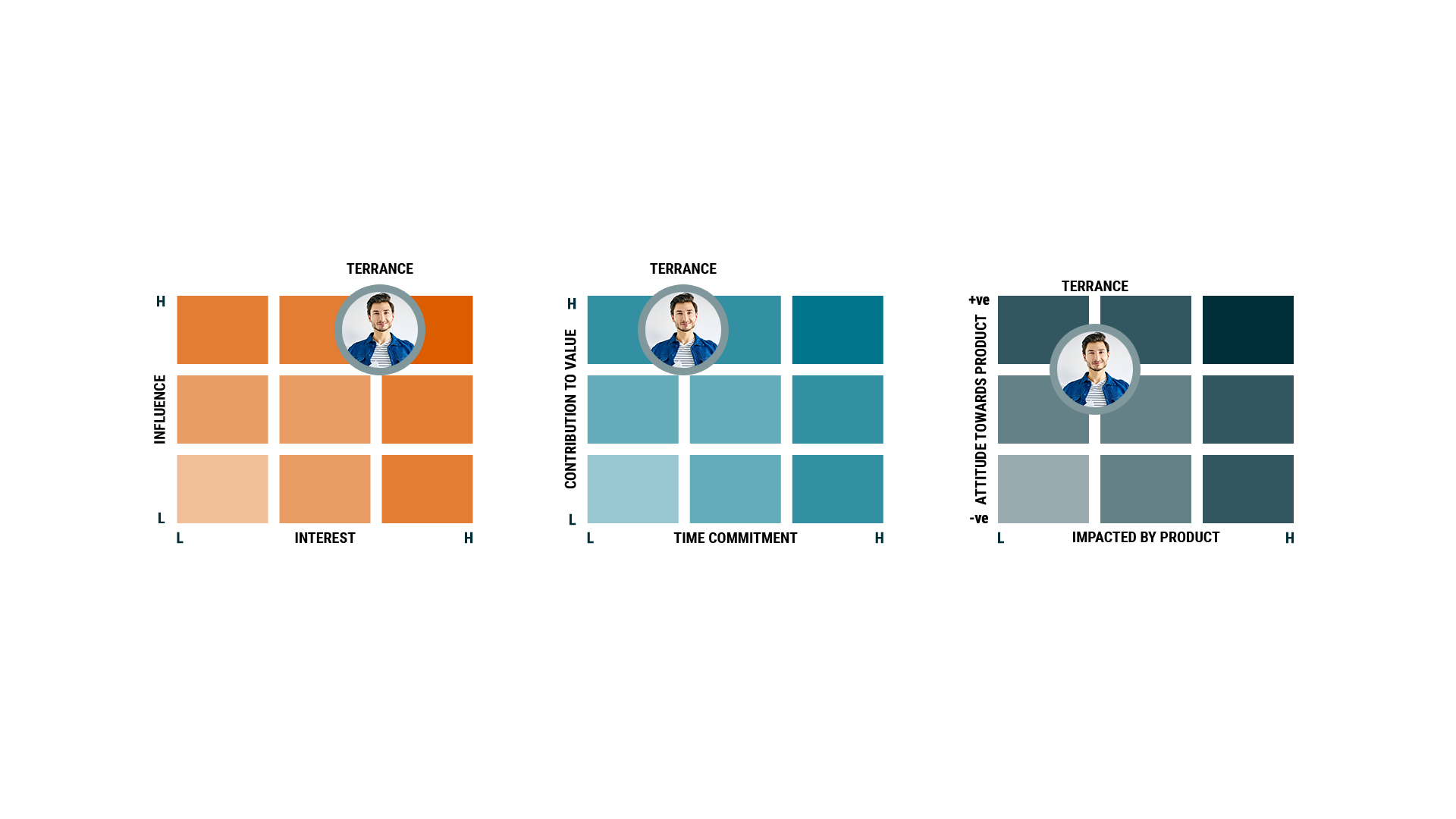 Outcome OutcomeSem concluded that:
Stakeholder analysis is an extremely important step in Product Ownership analysis, especially when there is a shift from a project with a fixed duration to a product set up. Stakeholder analysis is a continuous effort. New stakeholders may emerge during the product lifecycle. They can change the direction and influence the course of the product. Good stakeholder analysis is the foundation that product success relies on. |
Stakeholder analysis leads to planning stakeholder engagement - to create meaningful, purposeful connections. Stakeholder engagement aims for each stakeholder to understand the value of their contribution to product success. Thoughtful consideration and planning enhances collaboration and connection.
Stakeholder engagement is core to the POA Practitioner's role as it contributes directly to maximizing the value of the product. Building meaningful working relationships with the product team facilitates better teamwork. It involves establishing an environment for constructive communication and collaboration within the product team. Communication happens continuously, formally, or informally, during:
Stakeholder engagement:
Agile Extension Techniques
Case Study: Stakeholder Engagement - Real Estate Construction
- Collaboration: The right people are involved at the right time, recognizing their preferences and needs.
- Communication: What needs to be communicated, when and to who, recognizing the most effective delivery methods and the frequency.
Stakeholder engagement is core to the POA Practitioner's role as it contributes directly to maximizing the value of the product. Building meaningful working relationships with the product team facilitates better teamwork. It involves establishing an environment for constructive communication and collaboration within the product team. Communication happens continuously, formally, or informally, during:
- Product delivery meetings,
- Various stakeholder events (e.g., reviews and demos), and
- Through virtual communication channels.
Stakeholder engagement:
- Communicates the product vision and builds a shared understanding,
- Assists in engaging the delivery team with customers and other stakeholders,
- Influences others to support the vision,
- Contributes to the negotiation of priorities, and
- Facilitates collaborative agreement on product outcomes.
Agile Extension Techniques
- Planning Workshops: Determine what value can be delivered over an agreed upon period. This is an excellent tool to engage with a group of key stakeholders to understand different stakeholder perspectives.
- Reviews: Facilitate targeted communication and discussions with individuals or a stakeholder group.
- Storyboarding: Describe a task, scenario, or story in terms of how stakeholders interact with the solution. This generally produces better engagement due to visual cues.
- Visioning: Determine the desired outcome for the product, and word it in a concise and approachable manner. Visioning exercise is an important first step in a collaborative effort among key stakeholders.
- Collaborative Games: Create engagement between stakeholders and provides a fulfilling experience of analyzing a problem or discussing a solution.
- Lessons Learned: Understand stakeholders' satisfaction or dissatisfaction and offer them an opportunity to help improve working relationships.
- Risk Analysis and Management: Identify and manage risks as they relate to stakeholder involvement, participation, and engagement.
Case Study: Stakeholder Engagement - Real Estate Construction
| Background Terrance was a leader who recently joined the Product Management Office and had a high interest in the success of the HomeQi product. Challenge Sem concluded stakeholder analysis on Terrance. The collaboration and communication approach needed to be implemented. Sem knew that managing stakeholders was not simply practicing analysis but engaging the stakeholder in the right way to derive meaningful value. Action Sem had a quick session with Terrance to walk him through the product vision and roadmap. He asked Terrance about:
Terrance developed an emotional connection with the product. Outcome Sem shared his plan on when and how to collaborate and sought Terrance's advice and concurrence. Terrance was happy about playing an active role in the product roadmap. In one of the discussions with the team, Terrance highlighted that the product was quite similar to new initiatives by UK regulators to streamline construction-related information under a single source and model. He walked the team through these standards called "Building Information Modelling" (BIM), and PAS 1192-2 standards followed in the UK. This helped the team realize the synergy between different regulations and the product. It helped the team align the product to evolving construction data exchange standards by accommodating new and relevant features. Lessons Learned Stakeholder engagement is an active process. Each stakeholder is different. Their level of collaboration and communication needs should be understood and acted upon. For POA Practitioners it is important to understand the specific communication needs of stakeholders. This is about empathizing and reacting to stakeholders in the way they expect. True value from stakeholders can be derived only when they feel emotionally invested in the success of the product. |